A Gift for Mom & Clean Water in One Click

| No Comments

Board member Devlin Smith shares one way she's found to support African Well Fund while celebrating her mom!

I knew exactly what I wanted to buy my mom for Mother's Day and knew just where to get it-- GoodShop. I visited the site, a searchable listing of thousands of online retailers who will donate a portion of your purchase to the charity of your choice, entered the name of the retailer who offers the gift my mom had been asking for, clicked, placed the order, earned African Well Fund 2 percent of the purchase price, and the gift is now on its way.

Thousands of online retailers are listed with GoodShop, so you can use it to do all of your Mother's Day shopping. The site even has a special page featuring dozens of special offers for Mother's Day, so not only can you earn money for AWF with your purchase, you can also save yourself a few dollars.

GoodShop is a product of GoodSearch, a search engine that donates 1 cent per web search to the charity of your choice. Site users can also earn money for the charity of their choice several others ways through the site, including playing games, taking surveys and eating out. AWF has been listed with GoodSearch since December 2005 and has earned more than $1,500 in that time from its supporters' web searches and online purchases.

If you'd like your web searches or purchases to benefit AWF projects, click here and let the site know you're supporting African Well Fund (Schenectady, NY).


U2 Conference Reflections: A Grateful Community

| No Comments

African Well Fund board member Abbey Fisher recently attended the 2nd U2 Academic Conference in Cleveland. She shares her experience with us below.

IMG_1832.jpg

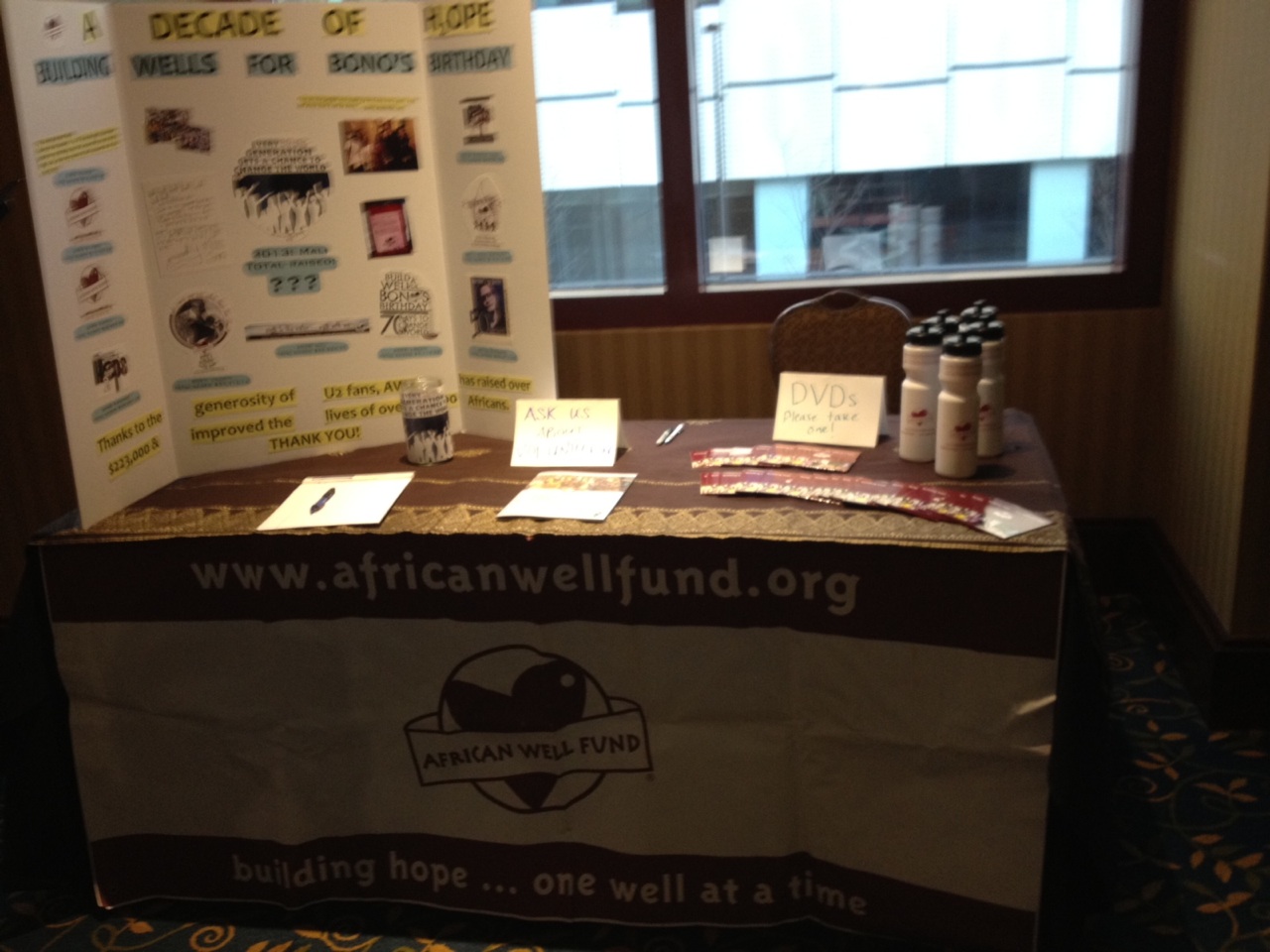
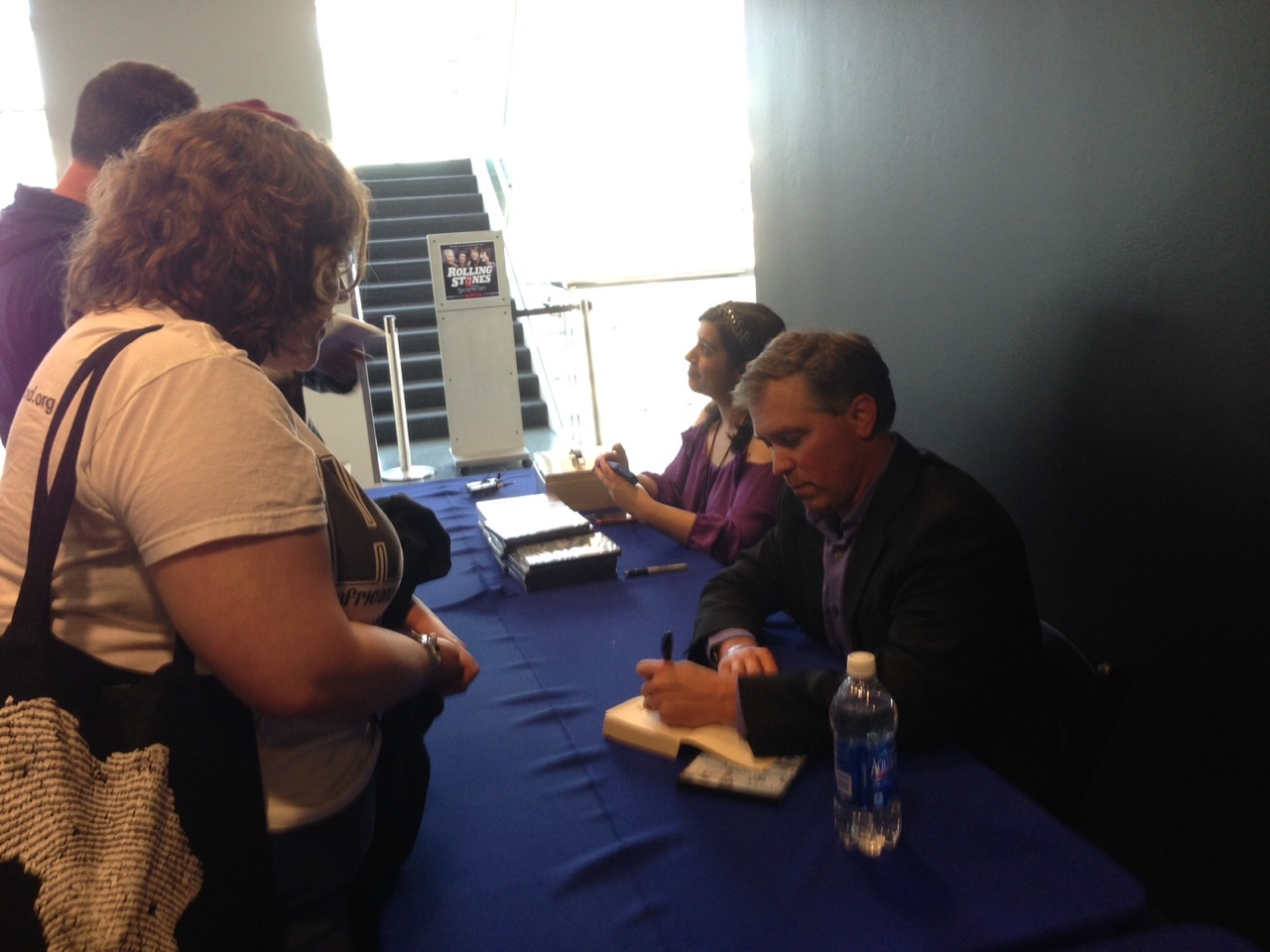
This past weekend, a group of African Well Fund volunteers and board members were fortunate to attend the 2nd U2 Academic Conference in Cleveland.  We hosted an information table, with the hopes of meeting old and new friends, raising funds for the 11th Bono Birthday Well, and promoting our work to a unique audience - those who are fans of U2 and who have studied their impact on society and on all of us.  I had the pleasure of creating our table display, and because I'm newer to AWF, it was a treat to look through information about the previous fundraisers, and see the growth of this great organization.  Ten years on, U2 fans have donated over $223,000 for the birthday wells, and made a difference in the lives of over 56,000 Africans - amazing!

 When I was thinking of what to write about for this post, I asked my fellow AWFers what their impressions were.  We felt that there were two themes expressed throughout the weekend: Community and Gratitude.  We were among people who shared our concerns for the people of Africa, Sarajevo, Burma; anywhere people struggle to survive.  And while we all got a few funny looks from friends when we told them where we were going for the weekend, this community of people really got it.  Our outreach has grown throughout the years, but U2 fans are the group that has overwhelmingly supported AWF since its inception.  These are our people.

 We are incredibly grateful for Scott Calhoun, the conference organizer, who worked so hard to make the event happen, and for going above and beyond in making sure we were featured prominently at two special events.  

IMG_8677.jpg

Diane Yoder & Rob Trigalet with 'Meet Me in the Sound' director Natalie Baker.

First was a screening of Natalie Baker's beautiful and moving film about the fan experience, Meet Me In The Sound.  When AWF's chair, Rob Trigalet, spoke in the film about the organization's origin, we heard several audience members say, "I didn't know that!" 

We are grateful for the opportunity to illustrate the power of music to inspire - thank you Natalie! 

On Saturday night, Unforgettable Fire, the world's longest-running U2 tribute band, played a great show at the Cleveland Hard Rock Café. The Hard Rock donated a portion of each ticket price to AWF!  Both events helped us raise several hundred dollars and get the 2013 Birthday Well fundraiser off to a great start. 

 We are also thankful to all of the presenters and conference participants - especially those who stopped by the table to say hi - for the stimulating conversation and encouragement.  Nearly everyone we talked to expressed gratitude for U2's impact in our lives, and for AWF's work.  We heard over and over again that we really do have the power to change the world, and that no other band could have brought together such a dedicated and passionate group of fans to make a difference.  Who knew that AWF's humble beginnings as a small group of fans who were inspired by Bono's work, and who were just "trying to do a damn thing" about the seemingly huge problems in our world, could itself be an inspiration for others?

IMG_0534.jpg

 Abbey Fisher & Bill Carter

My personal favorite session was at the Rock and Roll Hall of Fame, featuring Bill Carter, who brought Sarajevo to the world during the height of the siege in the early 1990s, with live video feeds during U2's ZooTV tour.  Bill spoke about the power of U2 to reach a wide audience, and how their popularity brought attention to the suffering of those living in Sarajevo at the time.  Bill signed his book, "Fools Rush In," and the DVD of his "Miss Sarajevo" film, which we'll be auctioning during the Got Water? auction this fall.  He could not have been more kind, and said he follows our work and would love to help us in any way he can.  Thank you, Bill, for your generosity!

I came home tired but really energized and hopeful about the future.  See you at the next conference!


Turning Pennies Into Clean Water

| No Comments
I once overheard a conversation between two teenage girls where they talked about how much they hated pennies. One of the girls said she disliked pennies so much that she threw them away. I was aghast, not just at the idea of literally throwing away money, but because, for me, pennies mean clean water.

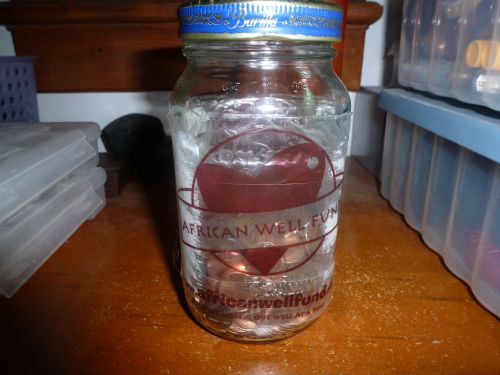
For more than five years, I've saved every penny I've gotten for the African Well Fund. I never spend pennies. I pick pennies up off the ground. I kept a jar on my desk at work and was always happy to receive baggies-full, mugs-full or even hands-full of pennies from coworkers.

One Christmas, a friend brought me a water jug filled with pennies that she rescued from someone who planned to dump the jar when he moved out of his house. The jug weighed nearly 20 pounds and yielded about $50 for the African Well Fund.

My penny hauls aren't usually that large, but I know that each one has made a difference. For the jars that I turn into cash (about $10 per jarful) and then into donations (more than $200 since I started saving pennies), African Well Fund uses that money to fund projects implemented by Africare that will improve access to clean water and sanitation for thousands of people, projects that will keep people healthy, projects that will help girls stay in school, projects that will make new businesses possible, projects that will change lives.

For World Water Day, the African Well Fund hopes to collect a mile of pennies (84,480 pennies, or $844.80, lined up makes a mile) to fund future projects, and needs your help. You can pledge to save pennies for the African Well Fund here.


P1010379.JPG
I've signed the pledge and my jar is ready. Let's work together to turn more pennies into clean water.


Walk a Mile in Her Shoes - Pennies for the People

| No Comments
Every day, women and children in developing countries must walk miles just to obtain enough water to live from day to day. These hours-long journeys reduce economic productivity, make it difficult for children to go to school, and since water points are not necessarily sanitary, increase the risk of waterbourne illness.

Where I live in the United States, a 'long walk' for water is the two minutes it takes to get from my desk to the water machine which dispenses clean, fresh water at no cost to me.

So this week we're challenging AWF supporters to become more aware of their water usage by hosting 'A Walk in Her Shoes Penny Fundraiser'. It takes 84,480 pennies lined up to make a mile, so why not collect a mile's worth of pennies in honor of those who make this journey every day?

Further, what if we focus on just how much water we use every day by committing to donate a token amount for that usage. A penny for a cup of coffee, a dime for a flush of a toilet, a quarter for the dishwasher or a shower? The average American uses 100-176 gallons of water every day. The average African family? Five.

Are you in?

If so, here's a quick guide to starting your own penny fundraiser at home, at work, or wherever your travels may take you.


1) Check out AWF's 'Mile in Her Shoes' kit, which is packed with water facts, fundraising ideas, lesson plans, and much more. This will give you all the info you need to move ahead with your own fundraiser!


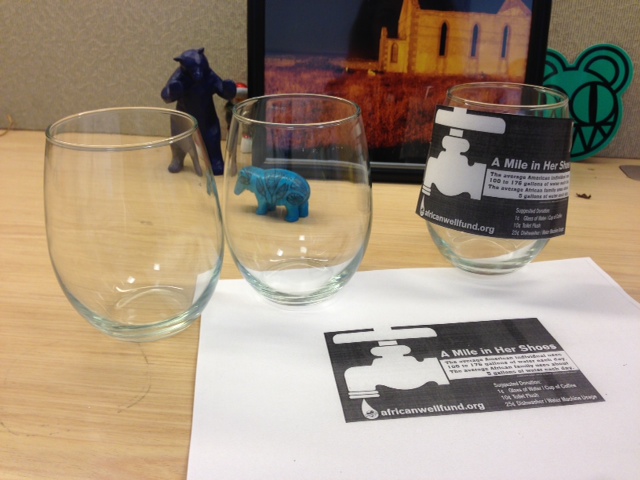
2) Find some containers. You don't need anything special - a glass, pitcher, or vase will do. Print out African Well Fund labels so everyone knows exactly what the collection is for, and tape or otherwise affix them on to your containers.

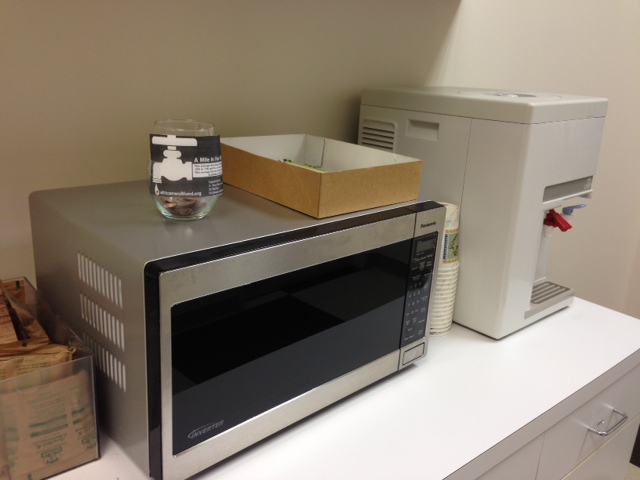
glasses.JPG3) Put your containers somewhere visible. If you're at work, this might mean a kitchen or break-room. At home, perhaps next to your coffee maker is a good bet.

glasses2.JPGAre you committed to going fully virtual? AWF has started a Crowdrise for 'Walk in Her Shoes'. Start a team, drum up support on your blog, family e-mail newsletter, or Facebook, and go to town!

4) PROFIT! Or, well, not quite. Spread the word - let your co-workers know what you're raising money for and why it's important. Tell your kids why you're scrounging for loose change whenever you go to get a glass of water.

5) Then, profit. Count up those pennies (and maybe nickels and dimes!) and make a donation to African Well Fund. There are a number of options available on our website.

Just make sure to note you're participating in the 'Walk a Mile in Her Shoes' fundraiser.


Ready, set... go!


ghanastories2-4.jpg
Last week, we covered AWF's second project in Ghana. These are stories from the communities served!


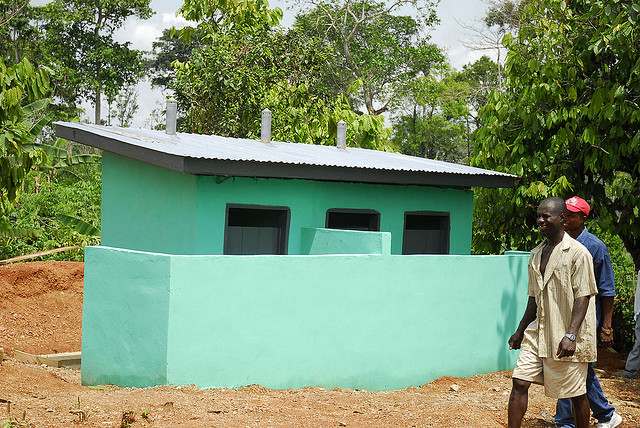
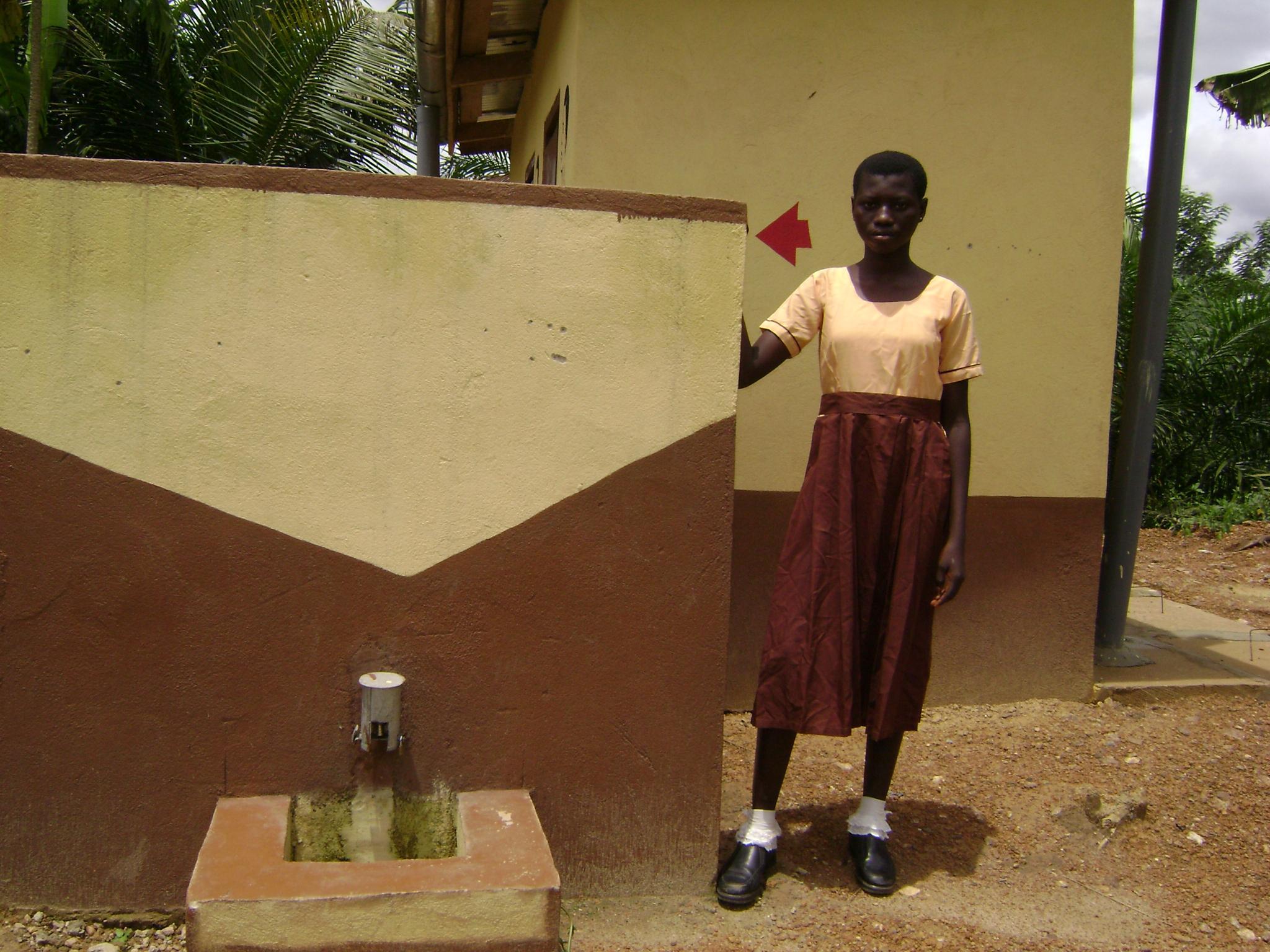
ghanastories2-1.jpg"Because of the improved toilet facility children no longer come home from school as frequently to access toilet facility as they used to do; they now seem to be camped at the school and only return after classes. Parents are now saved from the troubles of chasing children to go back to school when they come home".

Madam Efua Atta, Sabena

phase2-2.jpg

"At first, it was the duty of students to dig a pit and cover with planks to serve as toilet facility; this often did not last for long but now we have a neat lasting facility; there is now privacy and comfort."

Grace Sam, Sabena School, Stage 6

ghanastories2-3.jpg

"Because this facility is well covered we no more see flies visiting the toilets and later jumping into our meals. There is no fear of diseases; it is a nice and beautiful facility".

Joshua Sasah, Sabena School, Stage 5

ghanastories2-5.jpg

"Now it is easy for us to wash our hands after visiting the toilet; children can now use the facility without the fear of falling into it".

Theresa Appiah, Sabena, Stage 5


Looking Back: The African Well Fund in Ghana - Phase 2

| No Comments

phase2-1.jpg

Following the completion of our first project in Ghana in 2008, African Well Fund was lucky enough to continue work in the same region in 2009. This continuing work aimed at offering assistance to communities not targeted by the first phase of the Water for Cocoa Farmers initiative. These farmers expressed many of the same needs as those addressed by the original project. 

phase2-4.jpg

Agave's previous source of water.


Like other Ghanaian farmers, community members had to contend with unreliable water sources, leading to disease and additional economic hardship, with women and children having to spend hours every day looking for water, rather than engaging in other activities such as school or farming.

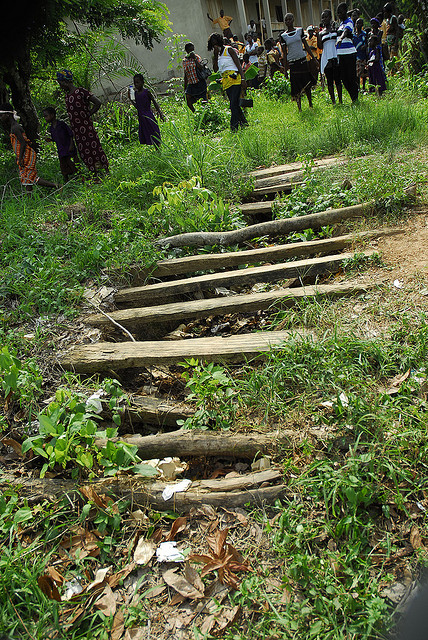
In addition, the lack of sanitation options available in the Wassa Amenfi West District, particularly in schools was a serious area of concern. Throughout the District, only three out of over 300 schools have toilet facilities on campus. The facilities which are available are unsuitable for children. Many consist of only a hand-dug pit covered by planks, into which children often fall. Lack of privacy caused still more problems, discouraging girls in particular from continuing with their studies.

The end result is a high rate of water-borne disease, as well as decreased economic productivity among farmers.

phase2-2.jpg

The pit which community members in Sabena used before the new KVIP latrine was built. Before construction, a young boy fell in.

In partnership with Africare and Mars, Incorporated, the 'Water for Cocoa Farmers Phase II' initiative brought potable water, toilets, and water and sanitation management training to eight communities in the Wassa Amenfi West District. Wells were constructed in Bokakore, Serwayo, Agave, and Ayitey Doriyem. Latrines were constructed at Nkwantanum, at a health clinic which worked for four other communities, and at a school in Sabena. Overall, over 5,000 community members were served through the project.

phase2-3.jpg


We've been revisiting AWF's first project in Ghana. Here are some quote from members of the villages served!


ghana-stories-1.jpg"Africare ni African Well Fund, Nsio ye de ma boye paa".

- Boeaten, a Jaman cocoa farmer


Translated from the Akan, this means: "Africare and African Well Fund, but for you,
we would have never dreamed of getting good water."

ghana-stories-2.jpgA village woman once saw a Puff Adder- the most poisonous snake in Africa, while gathering water from this pond.


"These people who
 brought this water might have been reading what is in my mind; they
 have saved my life and given me hope and time to do other things 
during the day."

-Yaa Mansaa


Yaa is a girl from Akokofe. For her entire life she believed water to be white in colour, because that was the only water she had ever seen.

She had to spend about 90% of her daily life fetching water, especially
 during the dry season.

ghana-stories-3.jpg
"The community's lifetime dream has been fulfilled thanks 
to Africare and African Well Fund."

- Nartey, an elder leader in Nkwantanum


Looking Back: The African Well Fund in Ghana - 2008

| No Comments

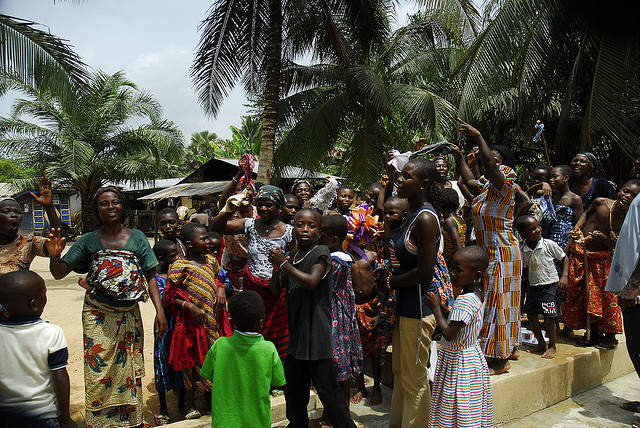
1.jpgIn 2009, the African Well Fund visited Ghana. Photos in this post are from that trip, taken in the village of Takyikrom.


For the first of what would eventually be three projects in Ghana, African Well Fund, along with Mars Incorporated, partnered with Africare to launch the iMPACT Health Project in ten cocoa farming communities of the Wassa Amenfi District.


3.jpg
Located in the Western Region of Ghana, the district had a population of 186,257. Of the active labour force, 75.6 percent were involved in agriculture - nearly all were cocoa farmers. District cocoa farmers could earn as little as $290.00 a year, while a bag of rice that feeds a family for a month costs $45.00, or well over $500.00 a year. The maternal mortality rate was persistently high at over three times the national average. Most families live on their own farmlands, miles from health facilities. With low population density and poor road networks, transportation was often inadequate, expensive, and in some areas, non-existent.


2.jpgThe village's previous attempt at digging a well.


The iMPACT Health Project sought to provide clean water and sanitation for people living in Wassa Amenfi communities. Unprotected water sources led to waterborne disease. In addition, Guinea worms, which grow up to three feet long inside a person were often found in community water sources. With little access to health care, treatment for these diseases was difficult, if not impossible. In addition the miles-long walks which women and children undertook to collect water kept them away from school, child-care, or farming and other income-generating activities.


4.jpg
6.jpgCommunities can use run-off water from the wells to irrigate vegetable gardens, as seen above.


7.jpg
For the first phase of the Water for Cocoa Farmers project, eleven communities were selected based on need and their prioritizing sanitation and water in their community action plans.


8.jpg
9.jpg
To improve accessibility to clean water, six wells were constructed, and another rehabilitated, each of which was managed by a newly formed Water & Sanitation committee made up of elected village members. The WatSan committees are involved in all decisions during the project, including the location of the wells, the method of construction, cash and labor contributions, the method of collection of monthly water fees, and the daily maintenance and cleanliness of the system.


5.jpg
In addition, the project trained Community Health Volunteers for each targeted community, each charged with outreach, providing hygiene and sanitation information for each village.

Between the villages of Juantuahkrom, Takyikrom, Jaman, Akokofe, Nkwantanum, Nsabrekwa, Essahkrom, Wiredukrom, Sewayor, Bokakore and Nyame Nnae, 5088 Ghanians were served.


10.jpg


Support African Well Fund- Holiday Edition!

| No Comments

Hard as it is to believe, but we're rolling right through December and into 2013. Maybe you celebrate Christmas, Hanukkah, Kwanzaa, Solstice, or Bodhi, or maybe you just pride yourself on your amazing New Year's parties- whatever the case, would you consider thinking of the African Well Fund during your seasonal celebrations? It can be as easy as one extra click while shopping for gifts online!


Here are a few of our favourite ways to give during the holidays:


-1- Donate! The simplest way to help us continue to increase access to clean water for those in Africa. Our current work in Mali is expected to provide water and sanitation to 1,800 students. You can read all about the project here!

-2- Purchase Well Shares for friends, family, co-workers, and hey, maybe even strangers! Like donating, Well Shares directly fund water projects in Africa. A great choice as a stocking stuffer, or for the person who has everything.

-3- Each year, generous artists Lara Wineman and Elsha Stockseth donate a portion of the proceeds of their holiday cards to the African Well Fund. You can see Lara's cards here  and Elsha's here. If you love sending out yearly greetings, these are a wonderful option!

-4- Shop using our affiliate links and you earn extra cash for AWF without spending a dime! An Amazon or iTunes fan? Bookmark our referral address as your main link to the site, and the donation becomes automatic!

-5- Along those lines, GoodShop provides a listing of thousands of retailers, all of whom will donate to AWF when you use their referral links. You can read about Devlin Smith's experience using GoodShop last year. So far simply clicking through GoodShop has raised $1800.00 for AWF!

This list is hardly exhaustive. You can shop our merch store, donate a percentage of your eBay auction, or see if your company's community giving would support AWF! For more ways to get involved, you can always check out this article at our main site. 

Maybe, though, the best way to give hasn't been thought of yet! What do you think? How will you support the African Well Fund this year, and in years to come?


Looking Back: The African Well Fund in Ghana

| No Comments
Welcome to Ghana!

Occupied since the Bronze Age, most of Ghanaian territory was until the beginning of the 20th century part of the powerful Empire of Ashanti. After a period of British rule, they were the first sub-Saharan nation to achieve independence from European colonialism in 1957 in favour of self-rule with a strong emphasis on Pan-Africanism.

Though a series of military coups slowed development for some time, since the early nineties Ghana has been a stable multi-party democracy pursuing economic growth and development. Rich in resources such as gold, as well being one of the largest cocoa producers in the world, Ghana has nearly twice the per capita output of some of its West African neighbors.

Despite this promise, however, Ghana is still a lower-middle income country, and still suffers from persistently high infant and childhood mortality rates. Unsafe water sources are relied upon by more than half of the rural population, and this dependence has allowed diarrhea, Guinea worm, bilharzia, typhoid, cholera, and dysentery to remain wide-spread. Diarrheal disease alone are the third most common ailment in health centers throughout the country.

The African Well Fund has sponsored projects in Ghana since 2008, working to help provide clean water sources to Ghanaian cocoa farmers and their families. We've also been fortunate enough to see the country first-hand - the projects AWF sponsored, and the communities affected.

Check out this video from that trip featuring our own Diane Yoder, and stay tuned as we continue to dive in to this incredible country!